Our maintenance plan
Kyle Smith, who owns Capital City, offers a maintenance plan for your furnace and air conditioner. The plan includes a visit before the cooling season and a visit before the heating season. We do not publish the price, so ask about it when you call or book online.
How often should a furnace be serviced
A furnace should be serviced each year, before the heating season starts. A tune-up in the fall is the time to look at parts that wear, such as the igniter, the burners and the exhaust vent, while there is still time to deal with them before the cold arrives.
The air conditioner should be serviced each year before hot weather. The refrigerant system, the coils and the outdoor unit are worth a look before the system has to run all day.
What time of year is best for HVAC service
Spring, before the first hot weather, is the time for air conditioner service. Fall, before the first hard freeze, is the time for furnace service. Booking early in the season leaves room to deal with whatever the technician finds, and you are not waiting without heat or cooling while parts are sorted out.
A maintenance plan puts both seasonal visits in one arrangement. Ask us how scheduling works for the plan.
What technicians commonly check on a furnace
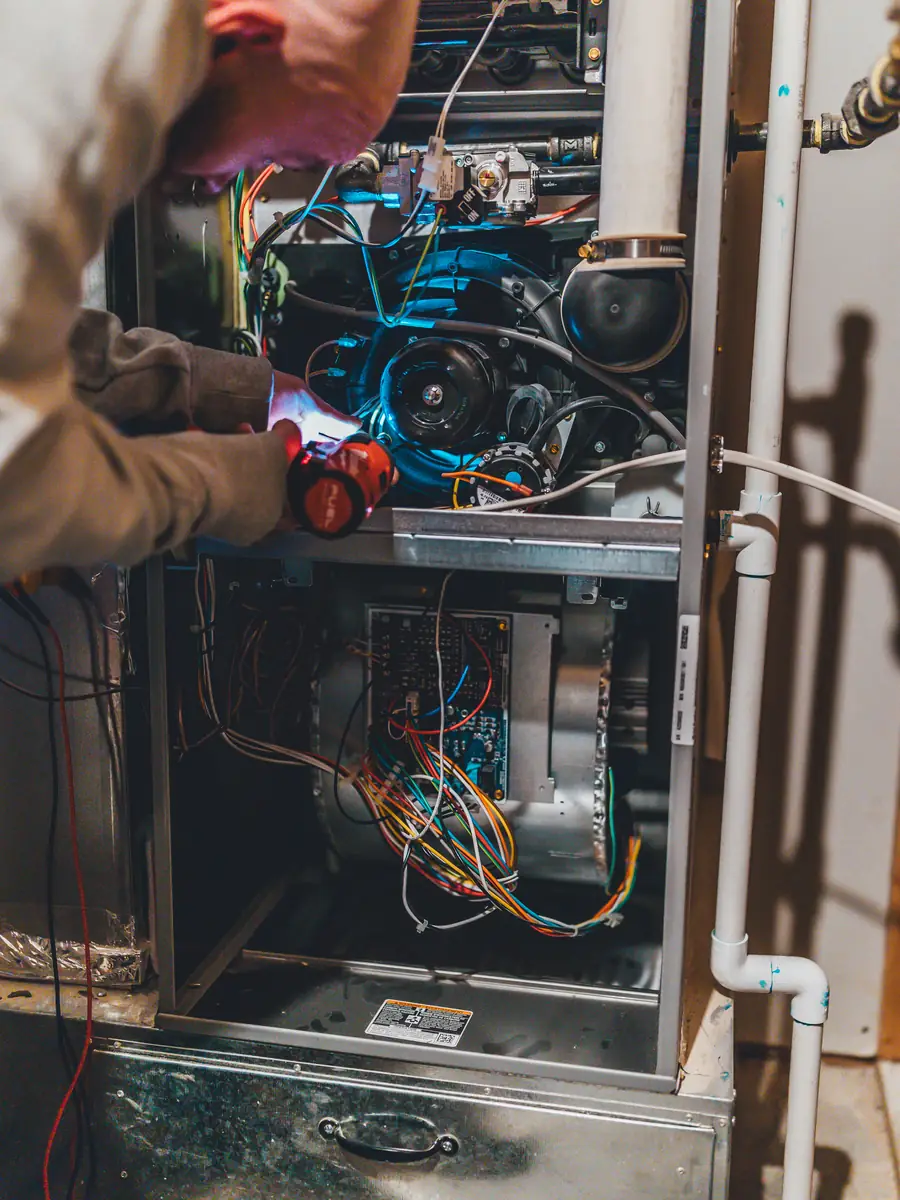
A furnace tune-up generally covers the parts that light the burners, move air and keep the system safe. These are the checks technicians commonly make.
- The burners and the parts that light them, looking for dirt or damage
- The heat exchanger (the metal chamber that keeps burner exhaust out of your air), looking for cracks or corrosion
- The igniter and the flame sensor, which confirms the flame is on
- The exhaust vent, for blockages, cracks or leaks
- The safety switches that shut the furnace off when something is wrong
- The blower that moves warm air through the ducts
- The gas connections, for leaks
- The thermostat settings and batteries
What technicians commonly check on an air conditioner
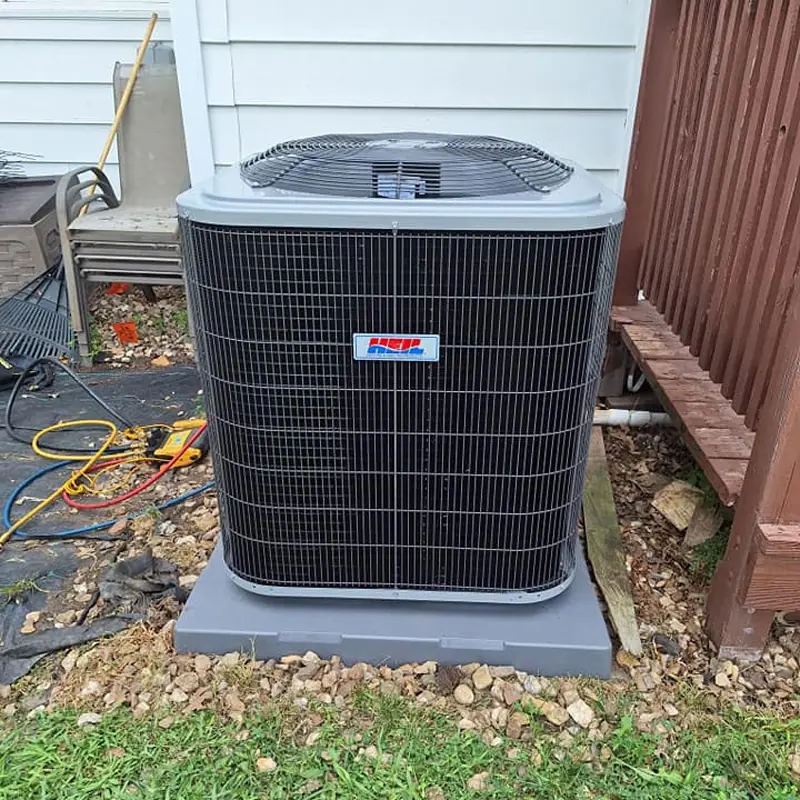
An air conditioner tune-up focuses on the outdoor unit, the indoor coil and the electrical parts that start the motors.
- The refrigerant pressures and air temperatures, which show whether the system is working as designed (refrigerant is not used up, so a low reading points to a leak or an earlier undercharge)
- The outdoor coil, the metal fins around the outdoor unit that release heat, for dirt
- The capacitor, a small part that helps the outdoor motors start
- The contactor, the switch that sends power to the outdoor unit
- The fan motor, which moves air across the coil, and the compressor, the pump that circulates the refrigerant
- The condensate drain line, which carries water away from the indoor unit
- The electrical connections
- The indoor coil, the part that cools the air inside the house, for dirt and ice
What you can do yourself
Some care is safe for any homeowner. Check the air filter every month. Replacement intervals vary by filter type and manufacturer, so follow the guidance printed on the filter or its packaging, and change it sooner if it looks dirty. Homes with pets or lots of dust often need changes more often.
Keep the area around the outdoor unit clear. Pull weeds, trim branches back and keep leaves and grass clippings off the unit so air can move freely. In winter, keep snow from piling against it.
Check the thermostat. If the screen goes blank or the system does not respond, the batteries may be low. The thermostat manual lists the battery type.
Do not refill refrigerant, test gas lines, repair wiring or open the unit. A technician does those jobs. If you smell gas or a carbon monoxide alarm sounds, leave the home and call 911 or the gas company.
Why Topeka weather is hard on equipment
Topeka systems work at both ends of the year. Hot, humid summers keep the air conditioner running for long stretches, and cold winters keep the furnace working through the coldest weather. Equipment under steady demand shows its weak parts.
A worn capacitor can struggle once a long run of hot weather begins. A weak igniter can fail when the furnace has to run for hours. A drain line that is partly clogged can back up and leak. A technician looking at these parts before the season can find signs of wear early, though no tune-up can promise that a part will not fail later.
Service for rental properties
We work on homes and rental homes for landlords. A seasonal visit gives a landlord a look at the equipment's condition and a chance to deal with worn parts before a tenant calls to report a problem.
Repair versus replacement
If a technician finds a part that needs replacement, you can ask what it is and what it does. If the system is old and repairs are becoming frequent, ask for the repair cost alongside the replacement cost. Kyle's stated policy is that if there is a better option for you than our service, we will say so.
Photos from our jobs