
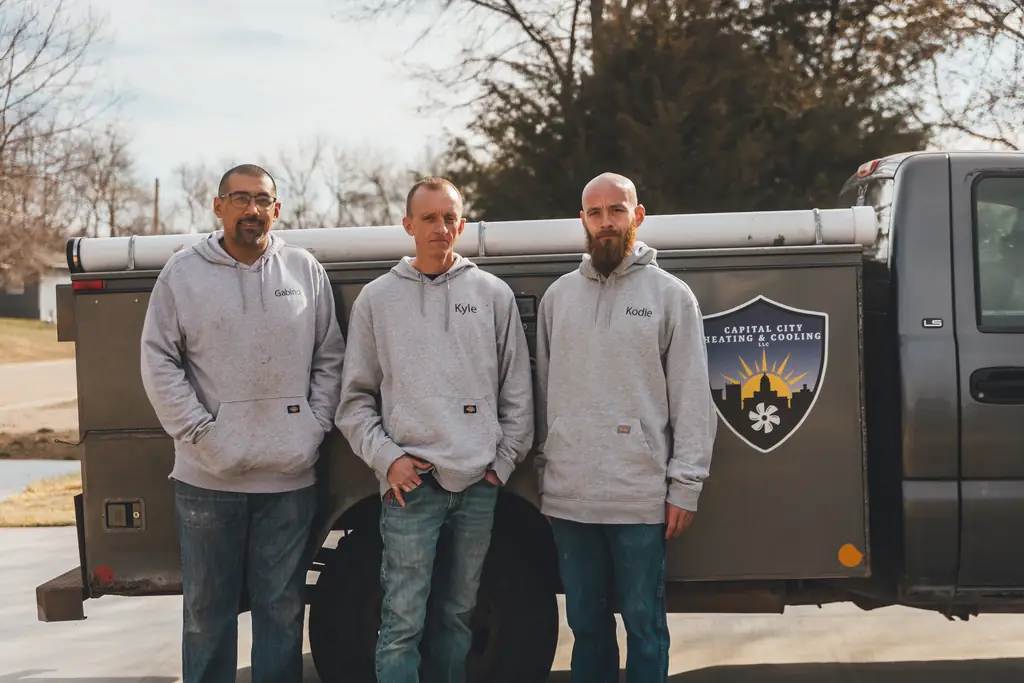
By Kyle Smith's crew at Capital City Heating & Cooling, Topeka, KS. 6 minute read.
A furnace blowing cold air in a Topeka home can have a thermostat setting problem, restricted airflow, or an internal fault. Start by checking the thermostat. Brief cool airflow at the beginning or end of a heating cycle can be normal. Air that stays cold while the house loses heat needs attention.
Leave the home and call 911 or the gas company from outside if you smell gas or hear a carbon monoxide alarm. If you see smoke or flames, or smell burning plastic or see sparks, get everyone out and call 911. Do not stay inside to investigate or adjust the furnace.
Thermostat checks for a furnace blowing cold air
Check that the thermostat mode is Heat and the target temperature is above the displayed room temperature. Review the schedule too. A programmed change can explain why the furnace stops before the room reaches the temperature you expected. A temporary hold overrides the scheduled temperature until the thermostat resumes its program.
The blower is the main indoor fan that moves air through the furnace and ducts. With the fan setting on On, it can circulate room temperature air between heating cycles. That moving air can feel cool against your skin even when the furnace has completed a normal cycle.
Set the fan to Auto for operation tied to heating. The furnace controls the fan timing, so Auto does not mean that the fan and burner start and stop together. If the thermostat settings are correct and the home remains cold, continue with safe external checks.
Normal startup and shutdown
A typical gas furnace starts its heating sequence before the main blower begins moving air into rooms. The burner lights and heats the heat exchanger, the metal assembly that transfers heat to household air while keeping combustion gases separate.
After a delay, the blower moves air across the outside of that heated assembly and into the ducts. Air already sitting in the ducts reaches the vents first. A brief cool sensation at startup can come from that air, especially when ducts pass through a cold space.
The burner stops when the heating demand is satisfied. The blower normally continues afterward to move remaining heat out of the furnace. Timing varies by model. Listen from outside the cabinet and note the pattern without removing a panel to watch the burner.
Filter and airflow checks
A dirty filter can restrict the air moving through the furnace. With less air carrying heat away, temperatures inside can rise too far. The limit switch, a safety control that responds to excessive temperature, may stop the burner. The blower can keep running as the furnace cools.
Turn the system off before checking a filter that is accessible through a designated external filter slot or grille. Follow the equipment instructions for access and leave internal equipment panels closed. If you cannot reach the filter through the intended opening, ask a technician to handle it.
Check for accumulated debris and follow the replacement schedule for the filter and furnace. Light passing through a filter is not a reliable test of its condition. Match the specified size and type, and follow the airflow direction marking when fitting a replacement. Never operate the system without its filter.
Keep supply vents, which deliver heated air, and return grilles, which draw air back, clear of furniture and rugs. Rooms need a return path when doors are closed. That path may lead to a shared return grille through an opening designed for airflow.
Overheating and repeated shutdowns
If the furnace repeatedly stops heating while the blower continues, turn it off and arrange service. That pattern can suggest overheating or another control problem. A new filter does not prove that the underlying fault has been corrected.
Do not repeatedly lower and raise the thermostat to force another start. Leave the furnace off until a technician has assessed suspected overheating and confirmed it can run safely. Never bypass a safety switch.
A technician checks the reason for the shutdown and the equipment instructions for restoring operation. Some safety controls reset under specified conditions, while others require service. The response depends on the control and the fault that caused it to operate.
Parts a technician may inspect
The igniter lights the burner. If it fails, the furnace cannot start its normal heating cycle. The flame sensor detects the burner flame so the control can allow fuel to continue flowing. A failure to confirm flame can stop heating soon after startup.
A control board is the electronic component that coordinates the heating sequence. A technician can determine whether the board is receiving the expected signals. Cold airflow alone cannot identify a failed board, igniter, or sensor. Leave testing and repair of internal parts to a trained technician.
A blower problem can also reduce airflow. Too little air moving across the heat exchanger can increase the temperature rise inside the furnace and trigger a shutdown. A technician checks actual airflow and operating conditions before deciding which component needs attention.
Cold air in only some rooms
If some rooms warm normally while others stay cold, note which vents are affected. A damaged supply duct can release heated air into a basement or crawl space before it reaches the room. Air can also lose heat as it travels through poorly insulated ductwork.
A return duct leak can draw air from an unwanted space into the system. Supply and return leaks affect airflow differently, so feeling cold air at a vent does not reveal the location of a leak. A technician can inspect accessible ducts and assess the room's air path.
Record whether the problem changes when an interior door is open or when the weather becomes colder. Keep vents clear, and leave internal duct adjustments to a technician. Avoid closing other room vents to force more air toward the cold room.
Furnace repair in Topeka
Call Capital City Heating & Cooling at (785) 221 9760, Monday through Friday, 8 AM to 5 PM, or book online. Tell us whether every room is cold, which thermostat settings you checked, and whether the blower keeps running after heat stops.
We service all makes and models. For a no heat call during office hours, in most cases we can get to you the same day. You will receive a text before we arrive and a text when the job is done.