Signs your AC needs repair
Watch for these symptoms and note when they began. The indoor coil, the part where refrigerant absorbs heat from household air, can freeze when something disrupts cooling.
- Warm or barely cool air from the vents while the system runs
- The outdoor unit hums but the fan on top does not spin
- The system starts and stops every few minutes, over and over
- Ice on the copper refrigerant line or on the indoor coil
- Water pooling around the indoor unit or the furnace
- A breaker that trips when the air conditioner tries to start
- An electric bill climbing while your cooling habits stay the same
Common AC repair problems
The capacitor is a small electrical part that helps certain motors start or run. When it weakens, the outdoor unit may hum without starting. A hum has several possible causes, so a technician needs to test the equipment before identifying a failed part.
Contactors are switches that send power to the outdoor unit. A failed contactor can prevent startup even while the indoor fan runs. The outdoor fan moves air across the outdoor coil, where refrigerant releases heat. A stopped fan can reduce cooling and damage equipment.
A clogged condensate drain, the pipe that carries water away from the indoor coil, can cause water to back up. A technician can check why the water is collecting. Turn the system off at the thermostat if water is leaking around the indoor equipment.
Refrigerant stays within a closed circuit during normal operation. Low refrigerant means a leak or an earlier undercharge. A technician must determine the cause before deciding what work is needed. Low refrigerant and restricted airflow can both contribute to ice on the indoor coil.
Why your AC is not cooling
Poor cooling has several possible causes, including restricted airflow or a component that prevents the outdoor equipment from operating.
A filter clogged with dust restricts airflow across the indoor coil. Too little air over the coil can let it become cold enough to form ice. Check an accessible filter according to the equipment instructions. If you see ice, leave cooling off and arrange service.
What you can safely check before calling
Check the thermostat and an accessible filter before calling, provided there are no danger signs. Keep equipment covers in place and leave work inside the system to a technician.
- Set the thermostat to Cool and a temperature below the room reading
- If a breaker has tripped and there are no danger signs, switch it fully off and then on once
- Inspect the filter only if you can reach it without opening an equipment panel, and follow the manufacturer's replacement instructions
- Turn the system off at the thermostat before clearing loose leaves around the outdoor unit, and keep hands and tools outside its cabinet
Do not open an electrical enclosure, remove equipment panels or touch wiring. If a breaker trips again after one reset, leave it off and call for service. For burning smells, sparks or an electrical problem, leave the home and call 911 from outside.
If you see ice on the lines or indoor coil, switch the thermostat from Cool to Off and arrange service. Running a frozen system can damage the compressor, the pump that circulates refrigerant. Allow ice to melt naturally and keep tools away from the coil.
How long to wait before restarting an air conditioner
Follow the equipment manual before restarting after a normal shutdown. Restart delays vary, and about three to five minutes is typical advice. Waiting lets pressure in the refrigerant circuit settle before the compressor starts.
A delay does not correct a fault that repeatedly stops the equipment. If the breaker trips again or cooling stops again after one restart, leave the system off and arrange service. Do not keep cycling the thermostat to force it to run.
Why AC blows cold on one side but not the other
Uneven room temperatures can result from airflow problems or differences in sun exposure and insulation. Ductwork carries air through the home. Dampers are adjustable plates inside ducts that control how much air passes through a branch.
A closed damper or a damaged duct can limit airflow to one area. Rooms also need a path for air to return to the indoor unit. That path can pass through a doorway or another designed opening. Each room does not necessarily need its own return vent.
Tell the technician which rooms stay warm and whether the problem changes with the time of day. We repair, replace and insulate ductwork, including ducts in basements and crawl spaces.
What a technician checks
A cooling diagnosis commonly includes airflow, thermostat operation and the indoor and outdoor equipment. A technician can test the capacitor and contactor, inspect coils and assess the drain. Refrigerant measurements help distinguish a refrigerant problem from other causes of poor cooling.
The temperature at a single vent cannot establish the whole system's condition. A technician considers incoming and outgoing air temperatures along with airflow and operating conditions.
We buy parts through local wholesalers, called supply houses, which helps keep repairs cost effective.
Repair versus replace
Ask whether repair addresses the full problem and consider the condition of the remaining equipment. Central air conditioners typically last about 10 to 15 years. Age alone cannot establish that a particular unit needs replacement.
Compare repair history and warranty coverage when reviewing your options. A recurring fault deserves diagnosis because replacing the same part again may leave an underlying problem unresolved. If there is a better option for you than our service, we will say so.
What affects the repair cost
The cost of a repair depends on the failed part and the work needed to correct the fault. Replacing a capacitor involves different work from locating and repairing a refrigerant leak. Applicable warranty coverage can also affect cost.
We price each job after we see your system. Ask what the proposed repair addresses and whether other known problems remain. If you choose installation, we provide a written estimate before that work starts.
How a visit works with us
You get a text before we arrive and a text when the job is done. When arranging service, describe when cooling stopped and whether you noticed ice or water. Mention any restart you already tried so the technician has that history.
AC repair in Topeka summers
Hot, humid weather adds to the cooling needed inside a Topeka home. Direct sun through windows and air entering through open doors also affect indoor temperature. A warmer room reading alone cannot identify a failed component.
Our maintenance plan includes a visit before the cooling season and a visit before the heating season. Follow the equipment instructions for filter checks between service visits. Replacement intervals vary by filter type and manufacturer.
If the home becomes dangerously hot, move to a cooler place. Fans do not make an overheated person safe. Call 911 for confusion, fainting or vomiting during extreme heat.
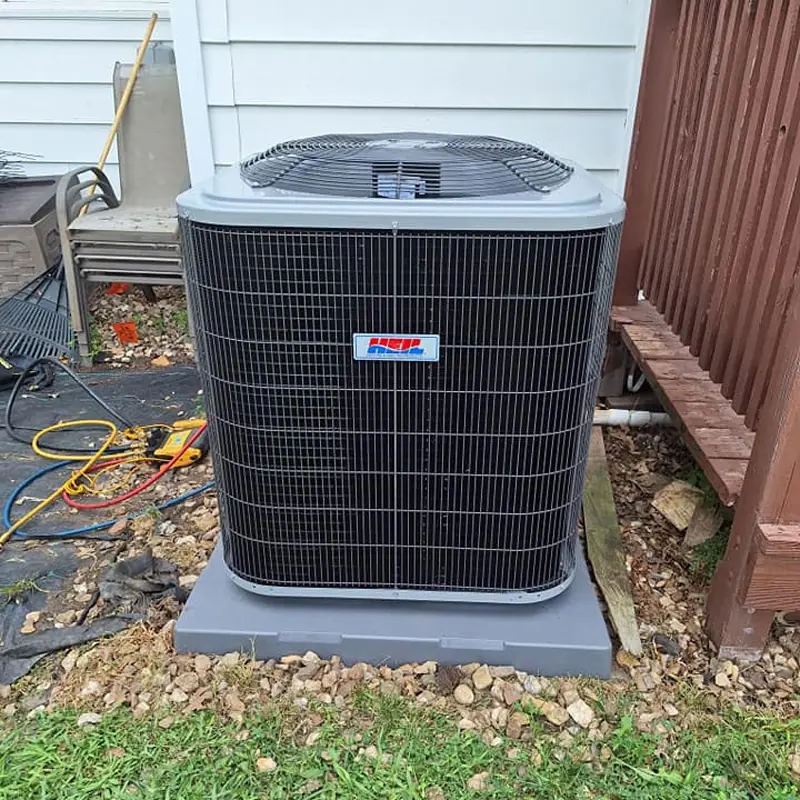
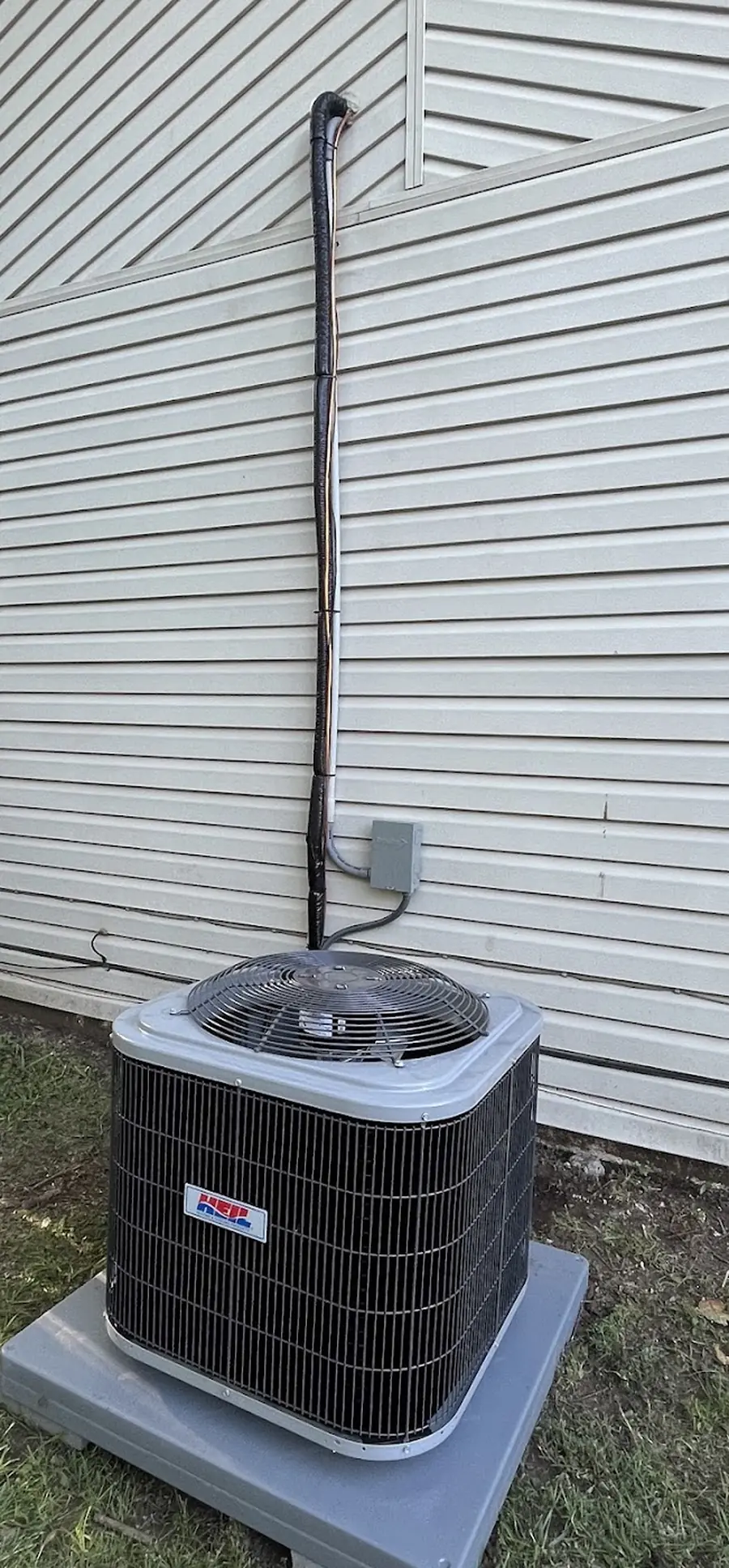
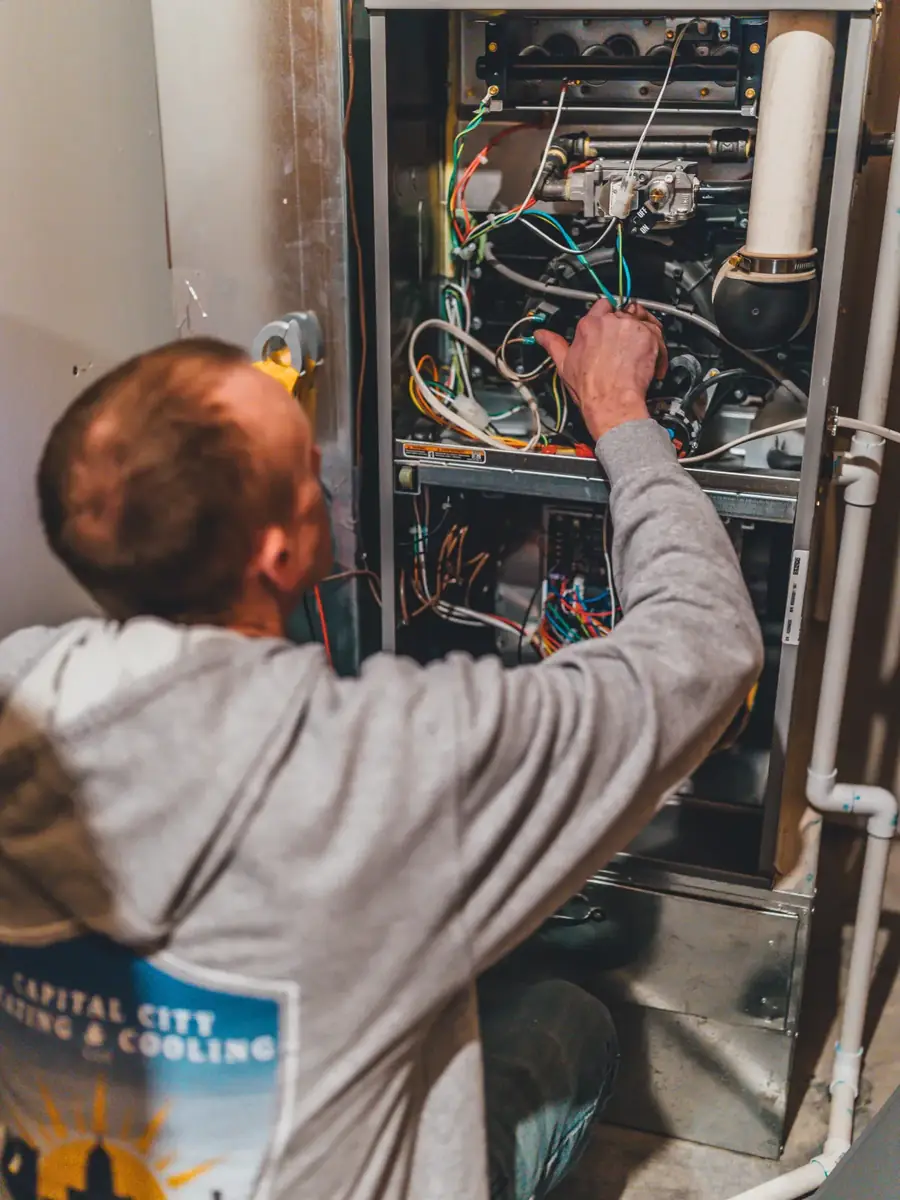
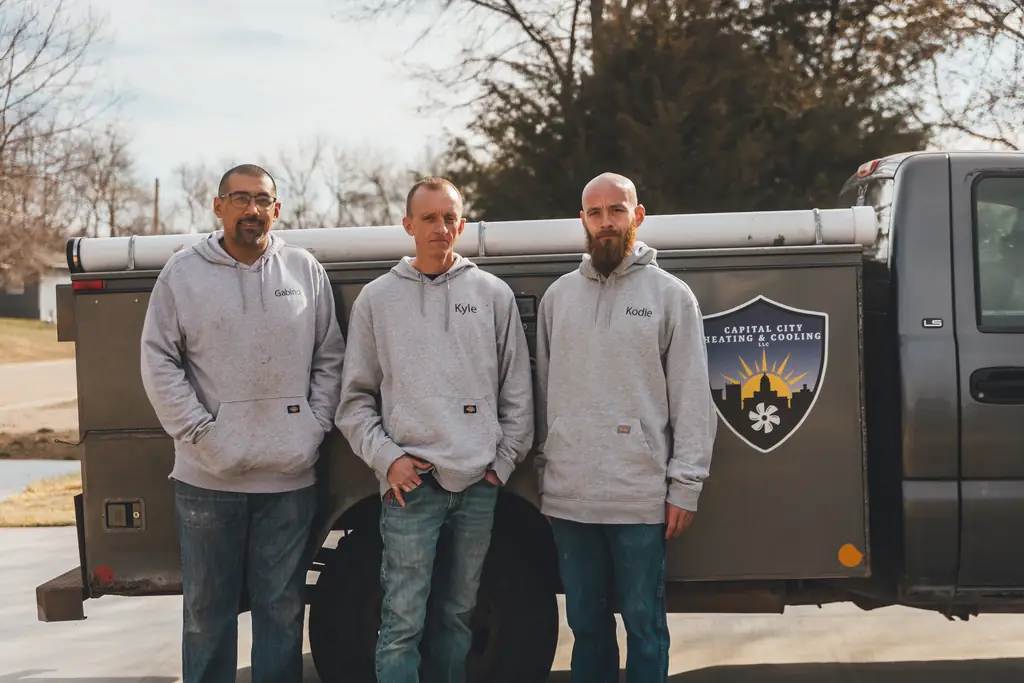
Photos from our jobs