
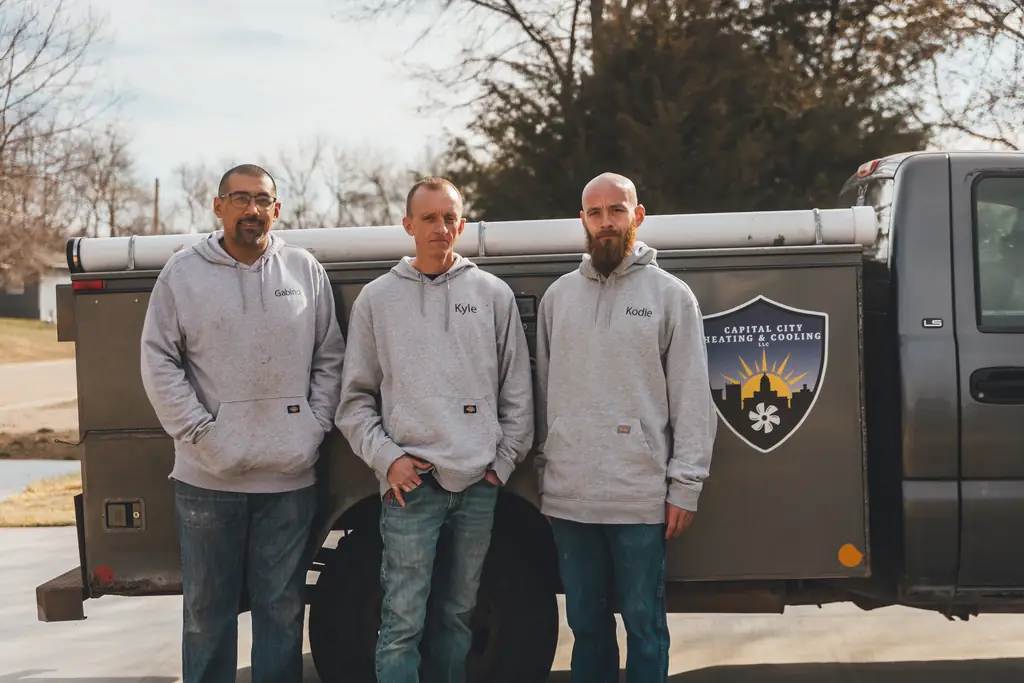
By Kyle Smith's crew at Capital City Heating & Cooling, Topeka, KS. 7 minute read.
When to replace your air conditioner depends on its condition, repair history and cooling performance in your Topeka home. Central air conditioners typically last about 10 to 15 years. An inspection can help you compare a specific repair with replacement. A dirty filter, blocked drain or airflow problem can cause symptoms that look like worn out equipment.
When to replace your air conditioner in Topeka
Consider replacement when a major repair would leave you with other worn components or unresolved cooling problems. Ask which part failed and what the technician found in the rest of the system. Repair history matters because repeated calls can involve the same unresolved cause or separate parts wearing out.
Check installation records for the equipment's age. The indoor coil and outdoor unit may have been installed at different times. If you cannot find a date, a technician can help identify the equipment from its model and serial information. Avoid assuming every part is the same age as the home.
Keep recent service records together. A previous refrigerant addition matters because refrigerant, the substance that carries heat, stays inside a sealed circuit during normal operation. Low refrigerant means a leak or an earlier undercharge. Repeated additions without identifying the cause leave the underlying problem unresolved.
What are signs my air conditioner is failing?
Cooling that falls short, frequent starts and stops, or unusual sounds call for diagnosis. Note whether the problem affects the whole home or one room. Whole home weak airflow can involve the filter or indoor fan. One warm room can point to a problem with the ducts that carry air to it.
The compressor is the part that pumps refrigerant through the system. The outdoor fan moves air across the outdoor coil to release heat. Hearing the fan does not tell you whether the compressor is operating correctly. A technician checks each part and the controls that operate it.
Repeated short runs can involve equipment sizing, airflow or a control fault. Long runs during hot weather need context too. Note whether the room temperature holds steady or keeps rising. That observation is more useful than treating every long cooling cycle as proof of failure.
Grinding, rattling or hissing can suggest a mechanical or refrigerant problem, but a technician must confirm the cause. Turn cooling off and arrange service if the unit develops a new, severe noise. For a burning smell, sparks or signs of electrical trouble, leave the home and call 911 from outside.
Does water or ice mean I need a new AC?
Water or ice needs investigation before you choose replacement. The indoor coil absorbs heat from air passing over it. Moisture from that air collects on the cold coil and drains into a pan, then through a drain line. A blocked drain or damaged pan can allow water to escape around the indoor equipment.
A technician checks the drainage path and looks for ice that has melted. A refrigerant leak in a coil needs a different repair from a blocked water drain. Depending on compatibility and condition, a coil can sometimes be replaced without replacing every indoor component.
Turn cooling off if you see ice on exposed components. Leave it off until the cause has been checked, and do not chip ice or apply heat. Restricted airflow and low refrigerant can both contribute to freezing. Leave refrigerant tests and repairs to a technician.
How should I compare repair and replacement?
Compare the repair with the condition of the equipment that would remain. Ask whether the diagnosed fault explains the symptoms and whether other damage is visible. A replacement compressor, for example, leaves the existing coils and other components in service. Ask whether those remaining components are in serviceable condition.
Review energy bills alongside utility rates and how much cooling you used. Hotter weather, a lower thermostat setting or changes in occupancy can increase use. A higher bill alone does not measure equipment wear. Any savings estimate needs assumptions about the existing system, replacement equipment and household use.
Replacement cost depends on cooling capacity, the amount of heat the system can remove, and installation requirements. Equipment access and ductwork changes also affect the job. We provide a written estimate before installation work starts. Compare the work included in that estimate with the specific repair under consideration.
Should I replace my air conditioner and furnace together?
Assess both systems separately and verify that the proposed combination can work correctly. In many homes, the furnace contains the blower, the indoor fan that moves air for both heating and cooling. The AC uses that fan even when the furnace burners are off.
A technician checks whether the existing blower can deliver the airflow required by the new cooling equipment. The space available for the indoor coil and the condition of the ducts also matter. A furnace that is working properly may remain if the proposed installation meets the equipment requirements.
The indoor coil and outdoor AC unit need a compatible match. Ask the installer to identify the proposed components and confirm that the manufacturer approves the combination. Replacing only one component is possible in some cases. The available equipment and the condition of what remains determine whether that option makes sense.
What should I check before choosing equipment?
Describe rooms that stay warm, changes to the home and any recent duct repairs. Cooling requirements depend on factors such as insulation, windows and how much sun enters the house. The size printed on the old equipment does not establish what the home needs now.
Ask how the installer determined the required cooling capacity. Equipment that is too large can cool quickly and stop before removing enough moisture. An undersized system can struggle to reach the setting in hot weather.
Duct leaks or restrictions can limit the benefit of new equipment. Tell the technician about weak airflow and rooms that become uncomfortable when doors close. Air needs a path back to the return grille, which draws it into the system. Each room does not necessarily need its own return vent.
Planning an AC replacement
Discuss replacement while you have time to compare equipment and installation scope. Availability depends on the proposed work and current schedule, so ask when an installation can begin. If your existing system fails during extreme heat, move to a cooler place. Fans do not make an overheated person safe; call 911 for confusion, fainting or vomiting during heat exposure.
We install Heil air conditioners with a 10 year parts warranty and a 2 year labor warranty on every system we install. Call Capital City Heating & Cooling at (785) 221 9760, Monday to Friday, 8 AM to 5 PM, or book online to discuss your Topeka home's cooling problem.