
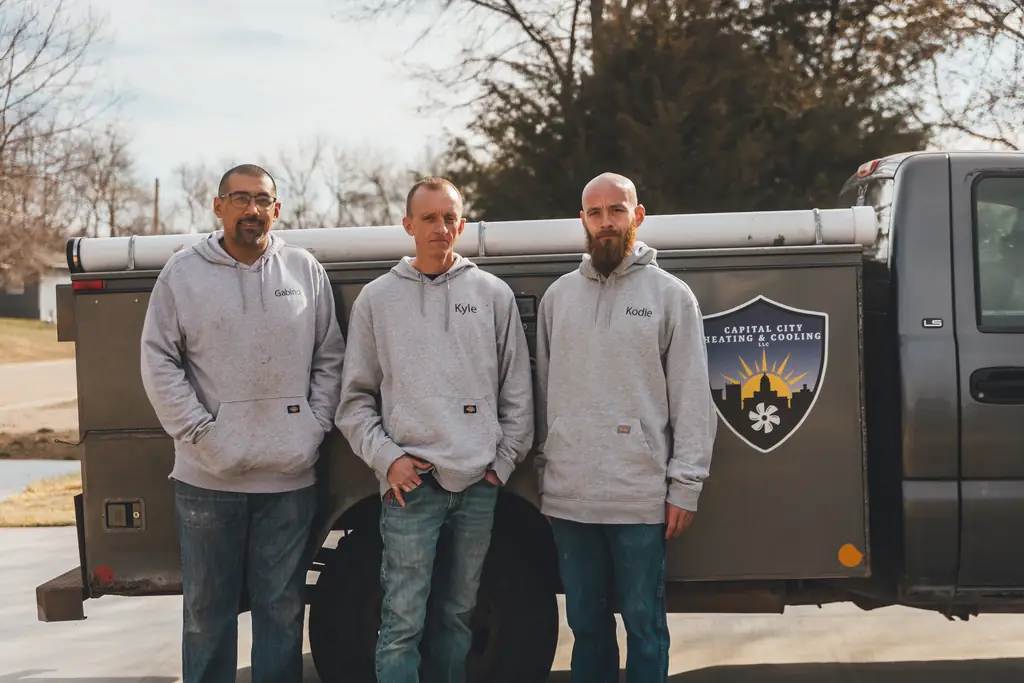
By Kyle Smith's crew at Capital City Heating & Cooling, Topeka, KS. 6 minute read.
Start your AC maintenance checklist with the filter and thermostat before Topeka's summer heat arrives. An early check leaves time to address weak airflow or a system that will not start. Keep equipment panels closed and leave internal repairs to a technician.
AC maintenance checklist for Topeka homeowners
Check and replace the air filter
Check the filter every month during the cooling season. Dust and lint collect on the material as indoor air passes through it. A loaded filter restricts airflow through the indoor coil, the tubing where the air conditioner absorbs heat from your home. Too little airflow can reduce cooling and allow ice to form.
Turn the system off before checking the filter through its designated homeowner access slot or return grille. Follow the equipment manual. If reaching the filter requires opening an equipment panel, ask a technician to handle it. Look for accumulated dust, damaged material, or a filter that does not sit properly in its holder.
Replacement intervals vary by filter type and manufacturer. Follow the filter and equipment instructions, and replace a dirty or damaged disposable filter. Light passing through the material is not a reliable test of its condition. A pleated filter has folded material that provides more filtering surface, but its replacement schedule still depends on the product and conditions in your home.
Choose the approved filter type as well as the correct size. Two filters with the same dimensions can resist airflow differently. A filter that captures finer particles may require more pressure to move air through it. Ask a technician about compatibility before changing filter types. Follow the airflow arrow on the replacement and the orientation in the equipment instructions.
Clear the area around the outdoor unit
Remove loose leaves and grass clippings from the ground around the outdoor unit. Keep plants away from its air openings using the clearance stated in the equipment manual. Turn the system off before working nearby, and keep hands and tools outside the cabinet.
The outdoor coil releases heat carried from inside the house. A fan moves outdoor air across its tubing and thin metal fins. Plants crowding the cabinet can obstruct that airflow. Direct mower clippings away from the unit when caring for the yard so they do not collect against it.
Leave debris caught inside the cabinet or stuck to the fins for a technician. Do not reach through the grille or straighten fins by hand. Coil cleaning methods depend on the equipment and the buildup. A technician can choose a suitable method without bending the fins or wetting parts that need to stay dry.
Look for water near the indoor equipment
As warm indoor air passes over the cold coil, moisture collects on its surface. This water, called condensate, normally flows into a drain pan and through a drain line. Some systems use a small pump to move the water. The drain may end indoors or outdoors, depending on the installation.
Look at the floor around accessible indoor equipment without removing panels. New puddles or water stains need attention. A blocked drain, a damaged pan, or melting ice can all cause water to appear there. Turn the system off and call for service if it leaks indoors. Do not pour cleaners into the drain or dismantle a pump.
An outdoor puddle alone does not establish a cooling failure. Rain and other water sources can wet the area. Record where you see water and whether it appears while the cooling runs. The absence of dripping at an outdoor pipe also does not prove a blockage, because drain arrangements and moisture removal vary.
Keep supply and return vents open
Supply vents deliver cooled air to rooms. Return grilles draw indoor air back toward the equipment. Keep both clear of furniture, rugs, and curtains. Closing multiple supply vents can restrict the airflow the system needs.
A room also needs a path for air to get back to the return grille. That path may pass under a door or through another opening. Every room does not need its own return grille. If a room gets warmer when its door is closed, mention that to a technician.
Check thermostat settings and startup
When outdoor conditions are within the equipment's cooling limits, set the thermostat to Cool and choose a temperature below the current room reading. Check whether a schedule or temporary setting changes that target. Follow the thermostat manual for ordinary user settings.
Allow the manufacturer's startup delay. About three to five minutes is typical advice, but controls and equipment differ. Repeatedly switching between Off and Cool can interrupt that delay. If the system does not start after the specified wait, stop the test and call a technician.
Leave switches or power controls alone if someone has deliberately turned them off. Equipment may have been isolated for repair or safety. Do not open the outdoor power box or turn an unknown control back on. A technician should establish why the equipment has no power before anyone restores it.
Note changes while the system runs
Listen from a safe distance without touching the outdoor cabinet. New grinding, squealing, or rattling calls for inspection. Sounds can suggest a loose or worn part, but a technician must confirm the cause. If the system makes a severe new noise, turn it off.
If you notice a burning smell, sparks, or signs of an electrical problem, leave the home and call 911 from outside. Keep away from wet equipment and wiring. For a gas smell or carbon monoxide alarm, leave the home and call 911 or the gas company from outside.
Checks technicians commonly make
During a tune up, technicians commonly assess airflow and inspect accessible equipment for wear or buildup. They may compare air temperatures before and after the indoor coil. The technician interprets that difference alongside airflow and indoor conditions. One temperature reading cannot identify every fault.
A technician can measure pressure and temperature to assess the refrigerant charge, meaning the amount of refrigerant in the system. This fluid carries heat outdoors and is not consumed during normal operation. A low charge points to a leak or an earlier undercharge. Finding the reason matters before adding more, and all refrigerant work belongs with a trained technician.
Other checks may include the motors and their capacitors, parts that help some motors start or keep running. Technicians use test instruments to distinguish a failed part from a control problem. They may also inspect the drain arrangement and check thermostat operation. Ask what the visit covers and whether any proposed repair is separate.
Scheduling maintenance
We offer a maintenance plan with a visit before the cooling season and before the heating season. Ask about the plan's current scope and price when scheduling.
For maintenance or a cooling problem in Topeka, call Capital City Heating & Cooling at (785) 221 9760 or book online. We are open Monday to Friday, 8 AM to 5 PM. When you call, describe any water, ice, or unusual noise you noticed and whether the system is currently off.