
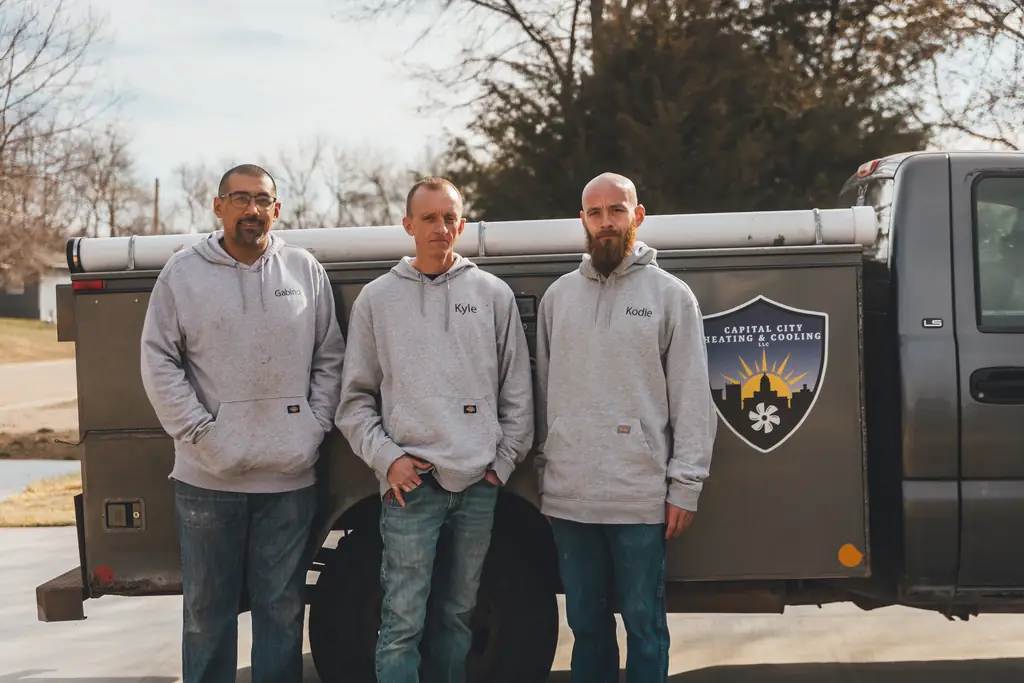
By Kyle Smith's crew at Capital City Heating & Cooling, Topeka, KS. 6 minute read.
Schedule furnace service once a year, following the equipment manufacturer's maintenance instructions. In Topeka, arrange it before the heating season so you can address faults before relying on the furnace daily. Annual service can reveal worn parts and operating problems. It cannot guarantee that every fault will appear during the visit or prevent every later breakdown.
How often should you service your furnace in Topeka?
An annual professional inspection is a practical starting point for residential furnaces. Your equipment manual may specify additional tasks or intervals based on the model. Keep that schedule alongside your filter instructions because a filter can need attention between service visits.
Cold Kansas weather makes a loss of heat urgent. Schedule routine maintenance while the furnace is still operating, and call sooner if its behavior changes. A new noise, repeated shutdown, or house that no longer reaches the thermostat setting needs assessment. Waiting for an annual appointment can leave an active fault unaddressed.
Furnaces typically last about 15 to 20 years. That range cannot establish the condition of an individual furnace. Ask a technician about observed wear, the repair history, and parts availability when evaluating older equipment. Keep the model information and previous service records where you can find them for the next visit.
What time of year is best for service?
Arrange furnace maintenance before the heating season, often in fall. Air conditioning maintenance belongs before the cooling season. Exact timing depends on when you use each system and the manufacturer's instructions. There is no need to wait for cold weather to have a furnace inspected.
The blower, the fan that circulates household air, may also operate during the cooling season. Its filter and airflow path can need attention even while the burner is unused. Follow the filter instructions throughout the year, including months when the blower runs for cooling.
If you missed fall service, schedule it during the season. A furnace that still heats can have wear worth examining. Mention any changes you have noticed, including shorter heating cycles or rooms that take longer to warm. Those observations give the technician a reason to investigate beyond the fact that warm air is present.
What is done during a furnace inspection?
Technicians commonly inspect the burner and ignition system, evaluate airflow, and check safety controls. The exact work depends on the equipment and the service being arranged. Ask what the appointment covers, including whether cleaning or further diagnosis requires separate work.
The heat exchanger is the metal passage that separates combustion gases from household air while transferring heat. A technician inspects it using methods appropriate to the furnace. Suspected damage needs further assessment. A confirmed crack is a safety problem, and the furnace must remain off until corrected.
The igniter lights the fuel, and the flame sensor lets the controls detect that burning has started. A technician can examine their condition and verify the heating sequence. Some furnaces use different ignition arrangements, so the checks follow the model's instructions. Do not attempt to light a burner or clean internal parts yourself.
Safety controls include a limit switch that responds to excessive temperature. A technician can investigate whether restricted airflow or another fault has caused shutdowns. The thermostat and controls also affect when heating starts and stops. A repeated shutdown needs its cause addressed before continued operation.
Airflow checks can include the filter, blower, and accessible ductwork. A technician may measure temperature rise, the difference between air entering and leaving the furnace, and compare it with the equipment specifications. Too little airflow can raise that difference and cause overheating. Internal adjustments belong to the technician.
Cleaning and lubrication depend on the manufacturer's directions. Many motors have sealed bearings that require no added oil. Ask which tasks apply to your furnace and what the technician found. Do not assume that every motor needs lubrication or that every inspection includes the same cleaning work.
How long does furnace service take?
Service time depends on equipment access, condition, and the work needed. Tell the company whether you are booking routine maintenance or reporting a heating problem. Diagnosis of an intermittent shutdown can require different work from a scheduled inspection. Ask about timing when arranging the appointment.
Keep the route to the furnace accessible and mention access limitations beforehand. Have previous repair records available if you have them. Leave the equipment assembled so a technician can evaluate its condition. There is no reason to remove a furnace panel before a service visit.
What maintenance can I do myself?
Check the filter monthly during use and follow its replacement instructions. Dust accumulation and the type of filter affect the interval. A filter's color alone does not determine whether it is usable, and looking through it toward a light is unreliable. Use the manufacturer's guidance and replace a filter clogged with dust as directed.
Turn the system off before an approved homeowner filter change. Use only a filter location accessible without removing a furnace panel. Match the specified dimensions and filter type, including the airflow requirements. Follow the arrow and installation directions, and ask a technician if compatibility is unclear.
Keep supply vents and return grilles clear. Supply vents deliver heated air; return grilles let room air travel back to the furnace. Furniture or curtains over either opening can restrict circulation. Rooms also need a return pathway when doors are closed, which does not always require a separate return grille in each room.
Observe thermostat settings and note any unexpected schedule changes. Leave wiring, gas controls, and internal repairs to a technician. Warranty requirements vary, so read your own warranty documents for maintenance and recordkeeping terms. Avoid assuming that every warranty has the same conditions.
What problems need attention before the next visit?
Repeated loss of heat, persistent weak airflow, and unfamiliar mechanical noise warrant service. An ignition problem can prevent the burner from lighting. A blower fault can reduce air movement, and a dirty filter can also restrict airflow. Symptoms overlap, so a technician confirms the cause before recommending parts.
A cracked heat exchanger can sometimes be addressed by replacing the exchanger. A technician can compare that option with replacing the furnace based on its condition and available parts. Keep a furnace with a confirmed crack off while deciding how to proceed because continued operation is unsafe.
If you smell gas or burning, see sparks, suspect electrical trouble, or hear a carbon monoxide alarm, leave the home immediately. Call 911 or the gas company from outside. Do not stay to investigate, reset the furnace, or open windows. Return only when emergency responders say it is safe.
Our maintenance plan
We offer a maintenance plan with a visit before the cooling season and a visit before the heating season. Ask what each visit includes when discussing the plan. Keep track of your service dates and the filter schedule for your equipment.
For furnace maintenance in Topeka, call Capital City Heating & Cooling at (785) 221 9760 or book online. We are open Monday through Friday, 8 AM to 5 PM. Tell us if the furnace has stopped heating so the appointment addresses the current problem.